
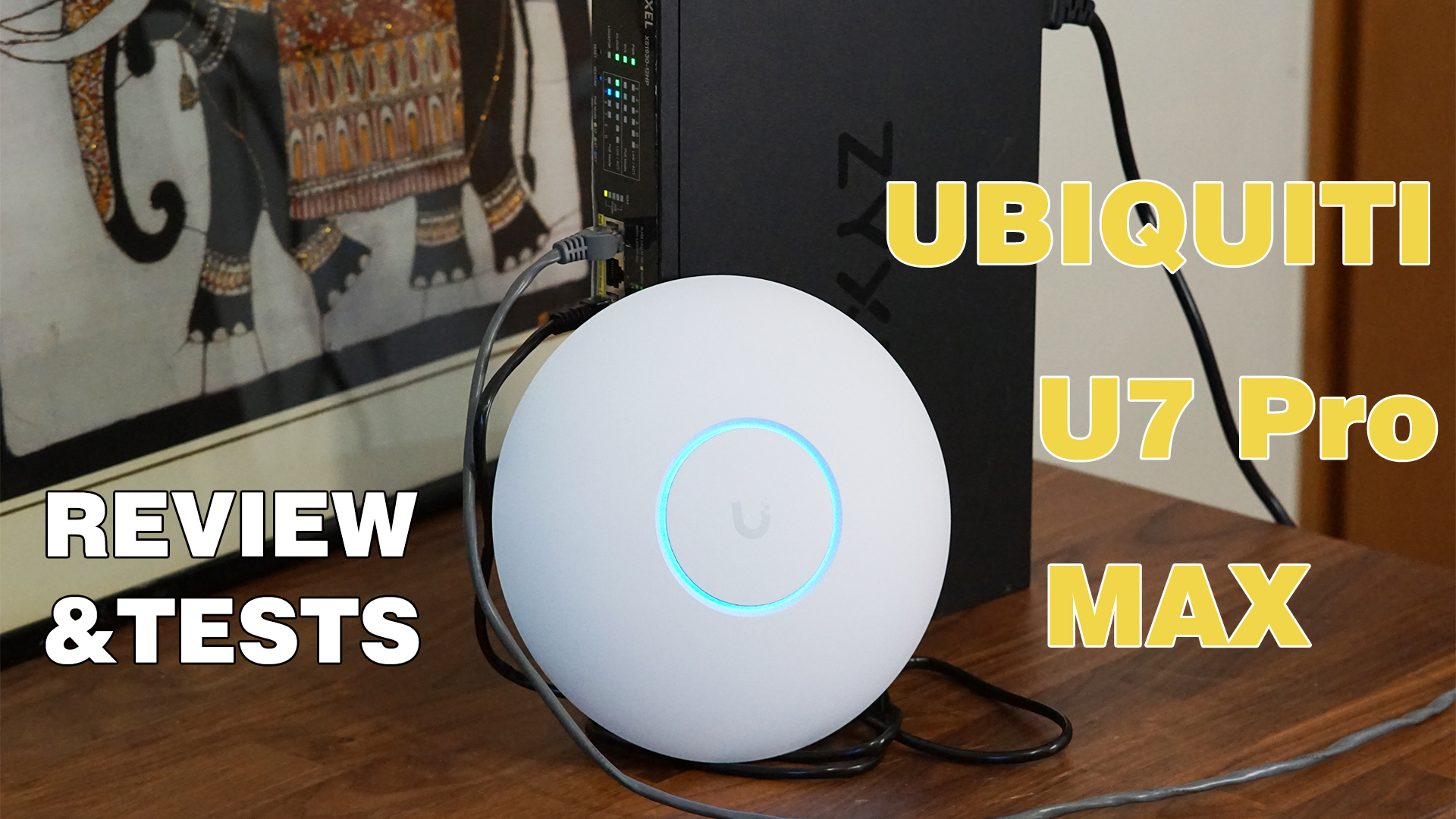
The U7 Pro Max is essentially the long-range version of the U7 Pro, claiming to offer a potentially better range due to improved antennas and we finally get 4×4 spatial streams for the 5GHz radio band. The 2.4 and the 6GHz configuration remains the same as on the U7 Pro. Does that move the needle though?
I opened the device and we continue to get a fan for keeping the temperature at a reasonable level and most other features are the same as on the Pro version. But there is one major difference, Uniquiti has added an extra antenna for their spectral scanning engine, so that the user can more easily deploy and configure the Pro Max access points to be less prone to interference.
It’s not the first time I see something like this since EnGenius has a similar system on its ECW230S and ECW220S, so it will be interesting to see how they compare. Before moving on to the design section, let’s talk about MLO. At the moment I created this article, it’s still a promised feature and not yet enabled on either the U7 Pro or the U7 Pro Max, which is a bit of a bummer (it is available in 2026 though).
The Design and Build Quality
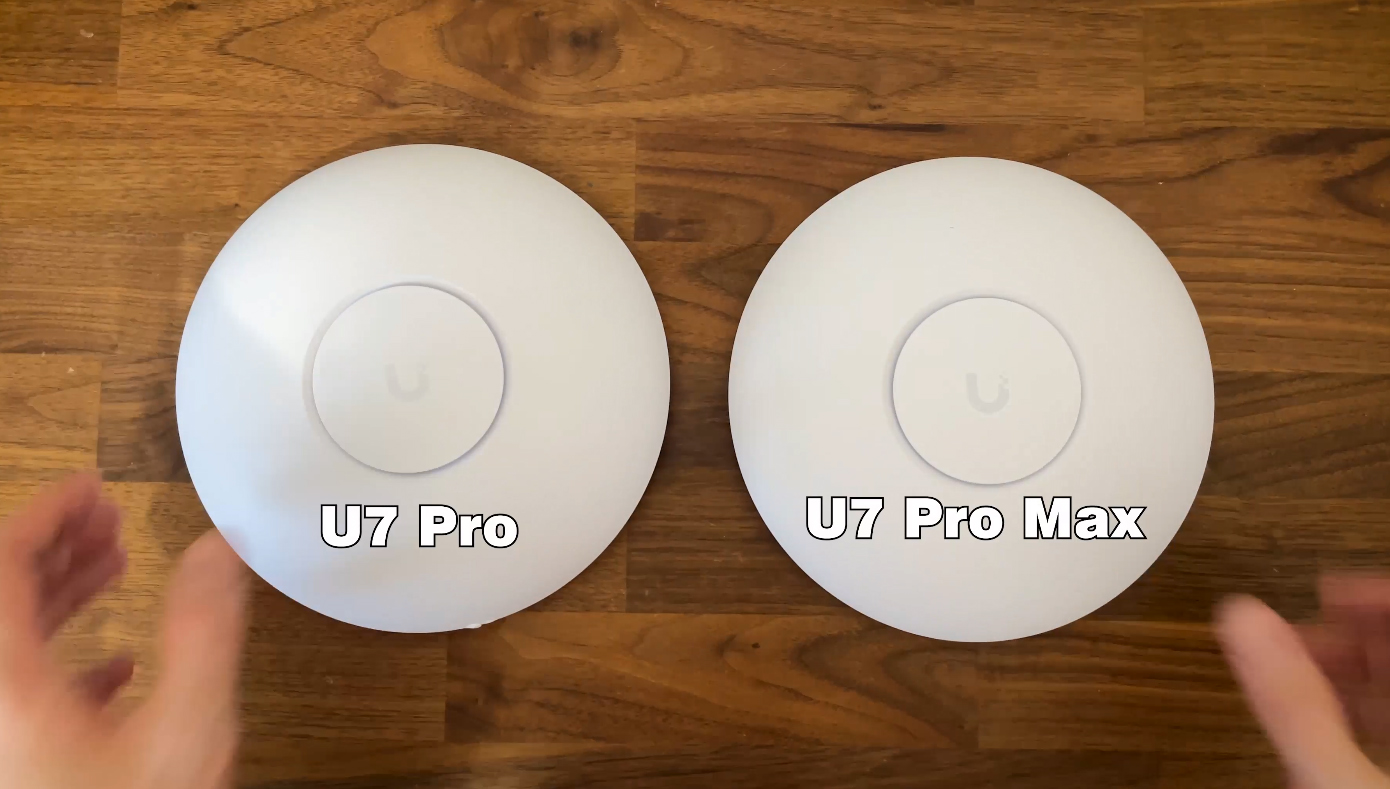
After taking the U7 Pro Max out of the package, it was immediately clear that it’s identical to the U7 Pro. The same size, the same shape, even the ports and everything else is the same. The top is made of plastic, while the bottom is metallic and the single LED shines through the top to form the iconic LED ring. This is a ceiling mount AP and you do get the mounting gear in the pack and if you want to mount the device on the wall.
About the ports, we still get a single 2.5GbE one and yes, it’s PoE. You get no other means to power up the access point. Near the port, there’s a narrow canal for the fan to exhaust the heat and a bit to the left, we can see the Reset button.
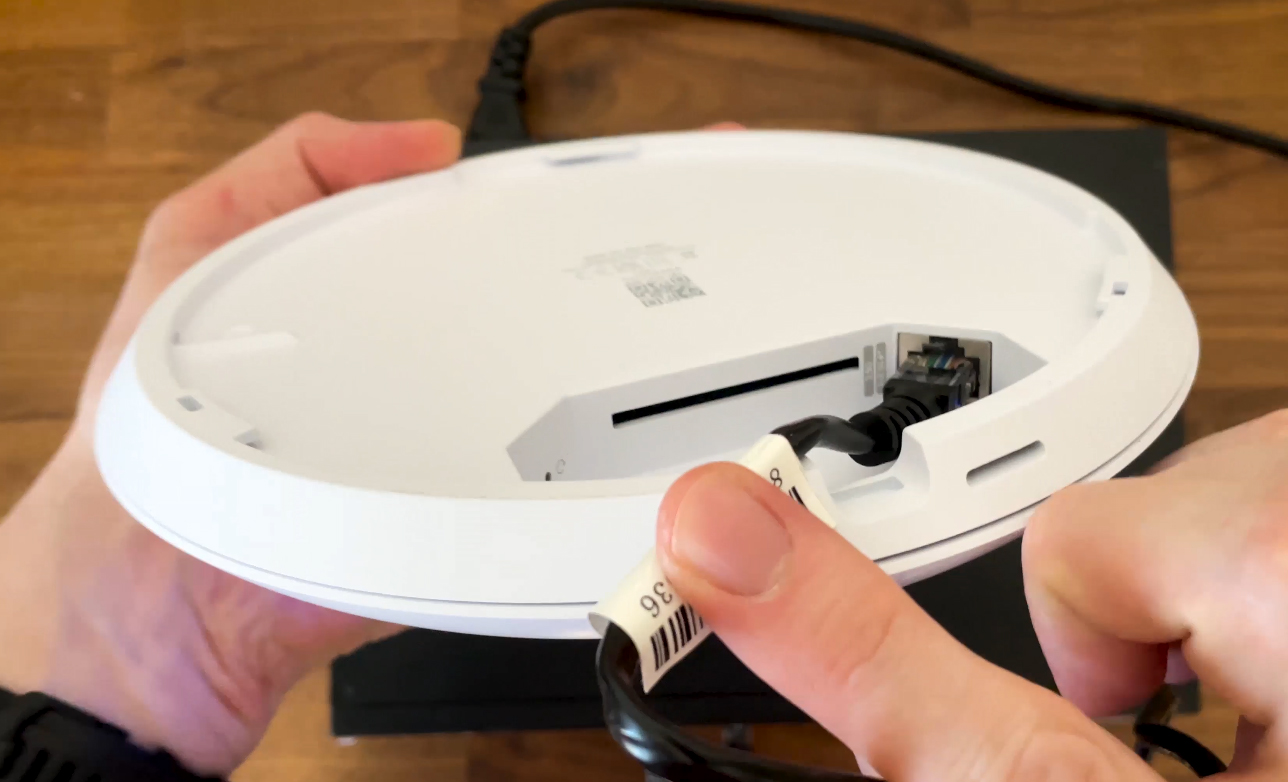
Since I have mentioned the fan, some people were worried that it may be loud, so is it? No, just like on the U7 Pro, it’s very silent and unless something goed wrong with the device, it shouldn’t stay at high rpms for prolonged periods of time. With that being said, let’s jump straight into the wireless performance in the Test Lab.
Wireless Performance and Test Lab
Ubiquiti U7 Pro Max
Test details
Test year: 2024. Firmware: 7.0.59.
Charts use measurements stored in the MBReviews benchmark database. Stability charts are downsampled for display; the full one-second series remains in the database.
Read the full MBReviews Wi-Fi testing methodology.
Explorer version: 0.9.11.
For the single-client tests. I used four client devices, one is a computer equipped with a MSI Herald-BE WiFi 7 adapter, one is equipped with an Intel AX200 WiFi 6 adapter, a laptop that relies on an Intel 8265 WiFi 5 adapter and an ancient Pixel 2 XL smartphone. The Ubiquiti U7 Pro Max was powered by a Zyxel PoE++ switch and the server computer had a 2.5GbE port, so no chance for hardware bottlenecks.
The downstream performance is so much better than on the U7 Pro, especially using the 6GHz network and I also saw it perform a bit better upstream as well, but I do need to mention some strange occurrences. After running the tests for a few hours, I did see that the 6GHz throughput would begin fluctuate, sometimes staying below 1Gbps. After letting the case cool a bit, everything went back to normal. The problem is that it was not consistent and sometimes it would need more, other times less, but a restart would fix it for a bit, while leaving it powered off for more did wonders.
It is possible that I experienced thermal throttling, but then again, the Windows 11, the WiFi 7 adapters, the clients and even the interference could have caused this. Funny enough, I got the best performance with the case open. As for the 5GHz throughput, it was better than on the U7 Pro which was to be expected considering the improvements between the two models. Also check some comparison tables:
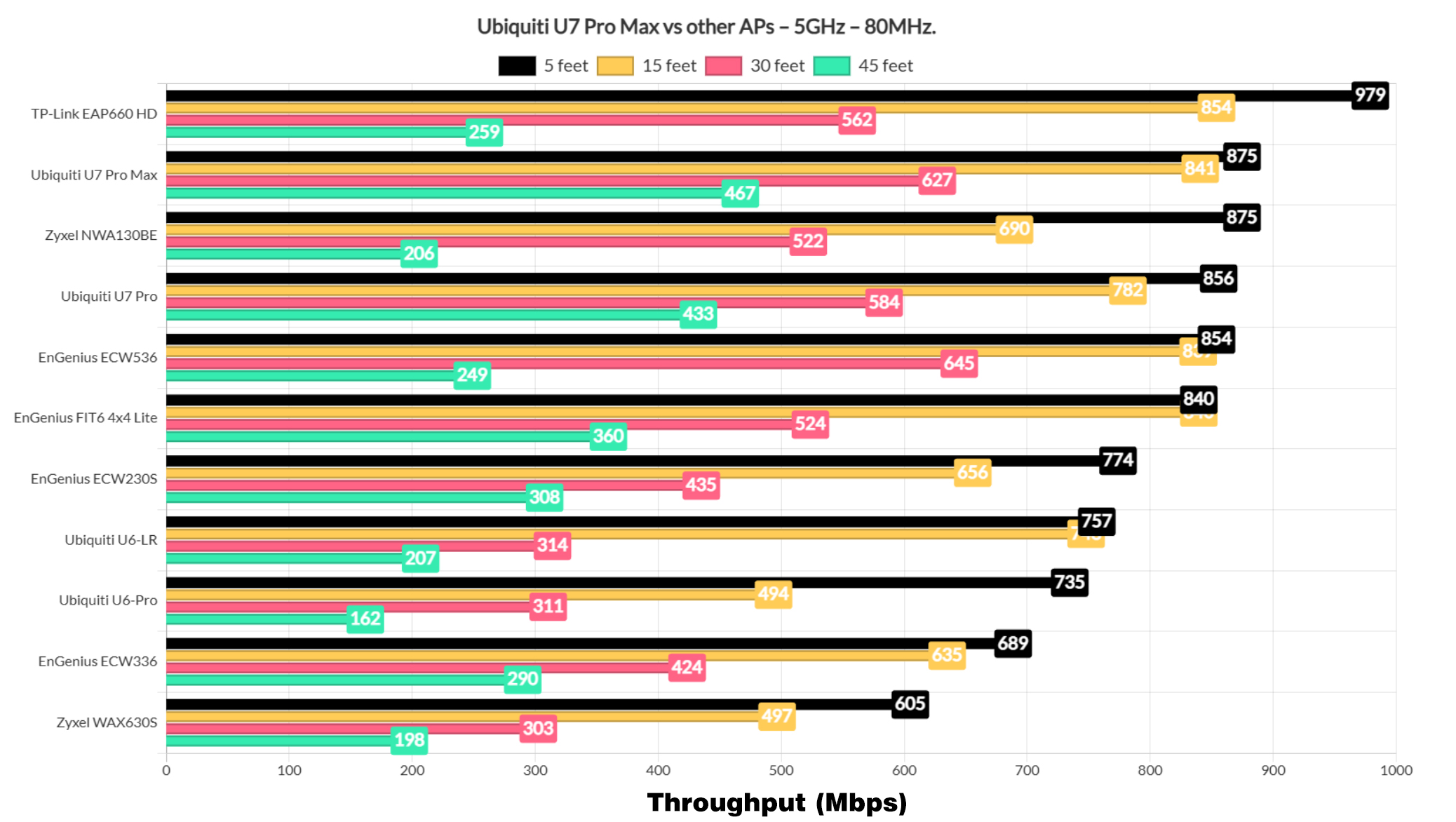
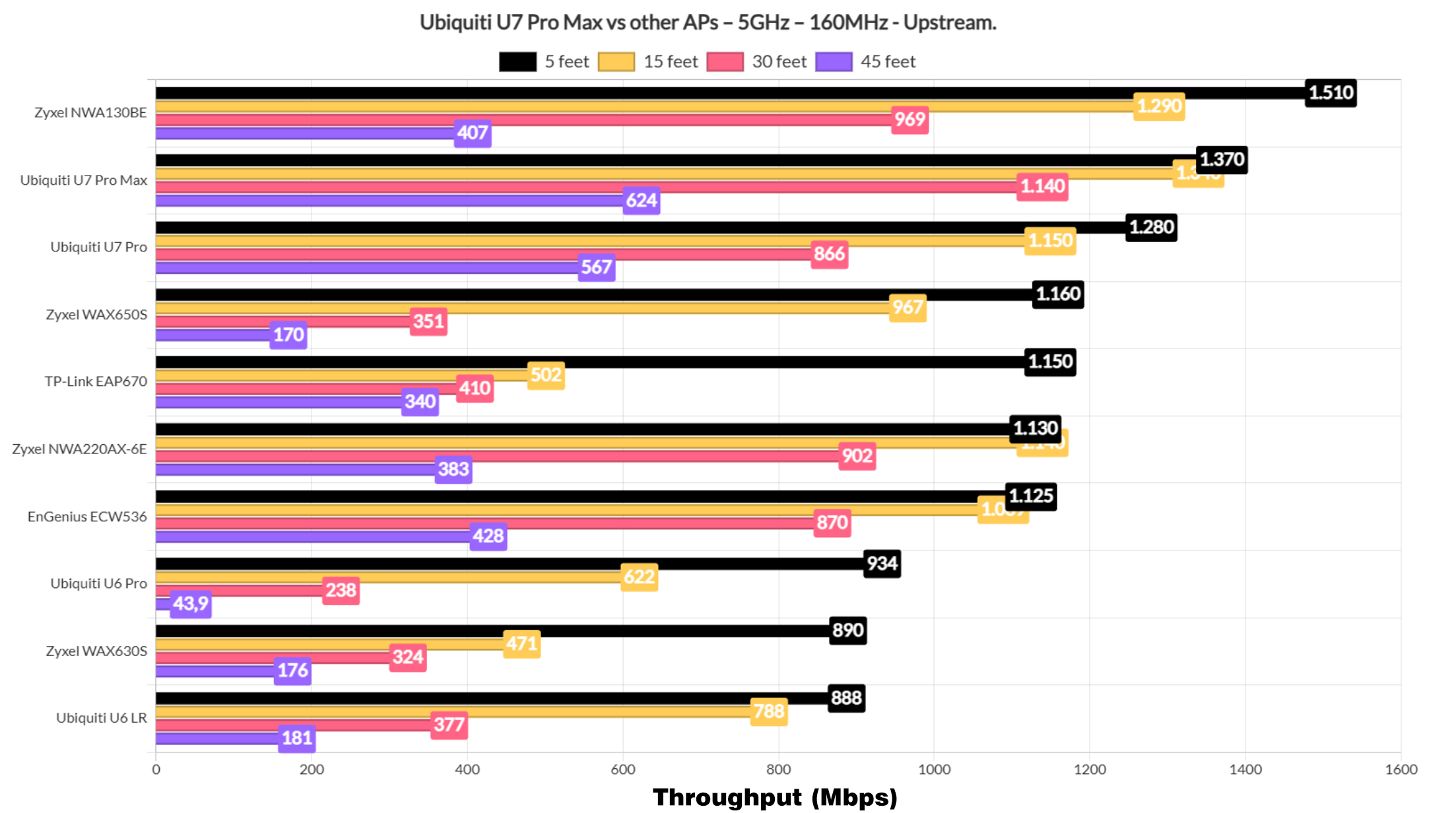
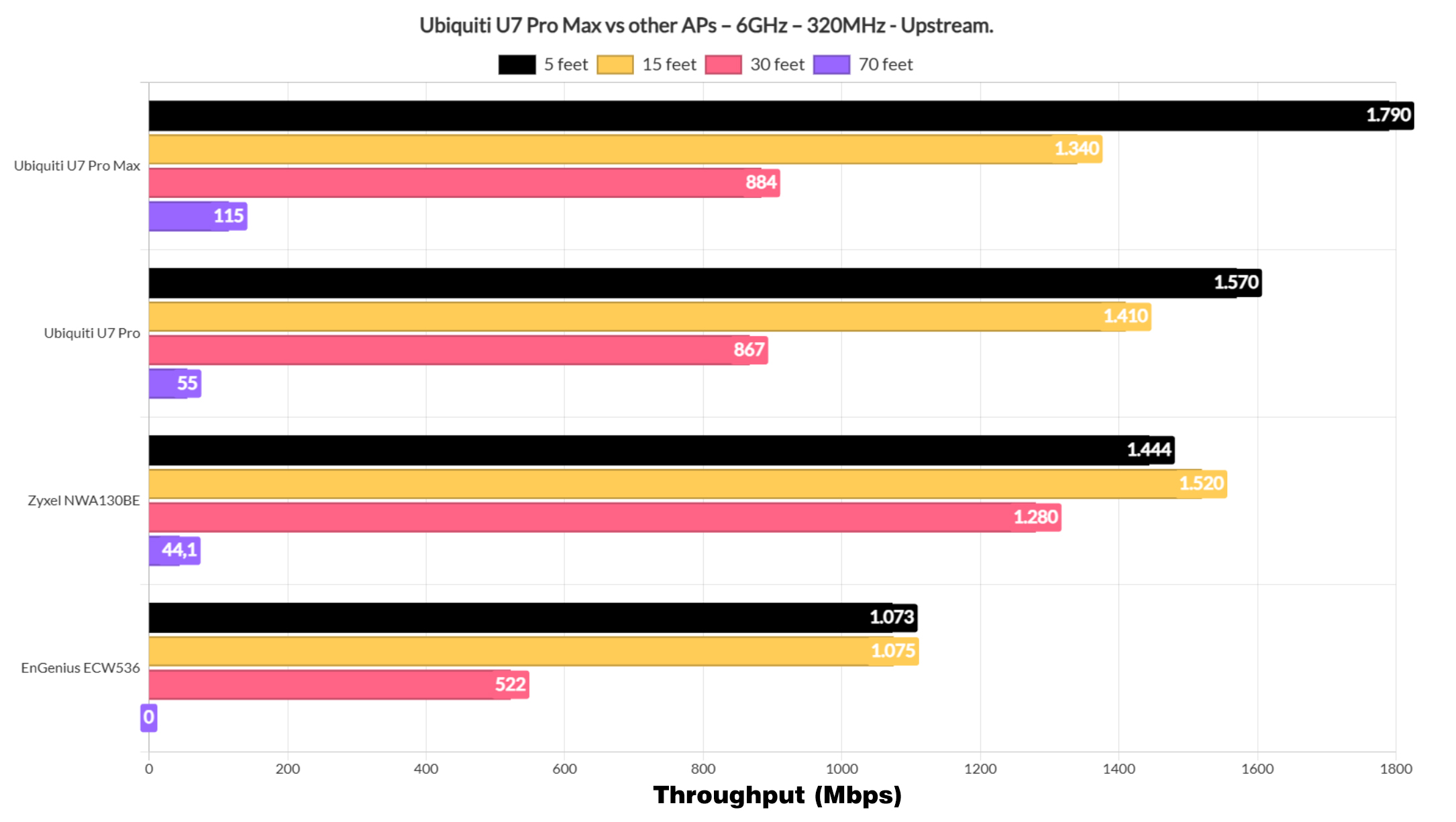
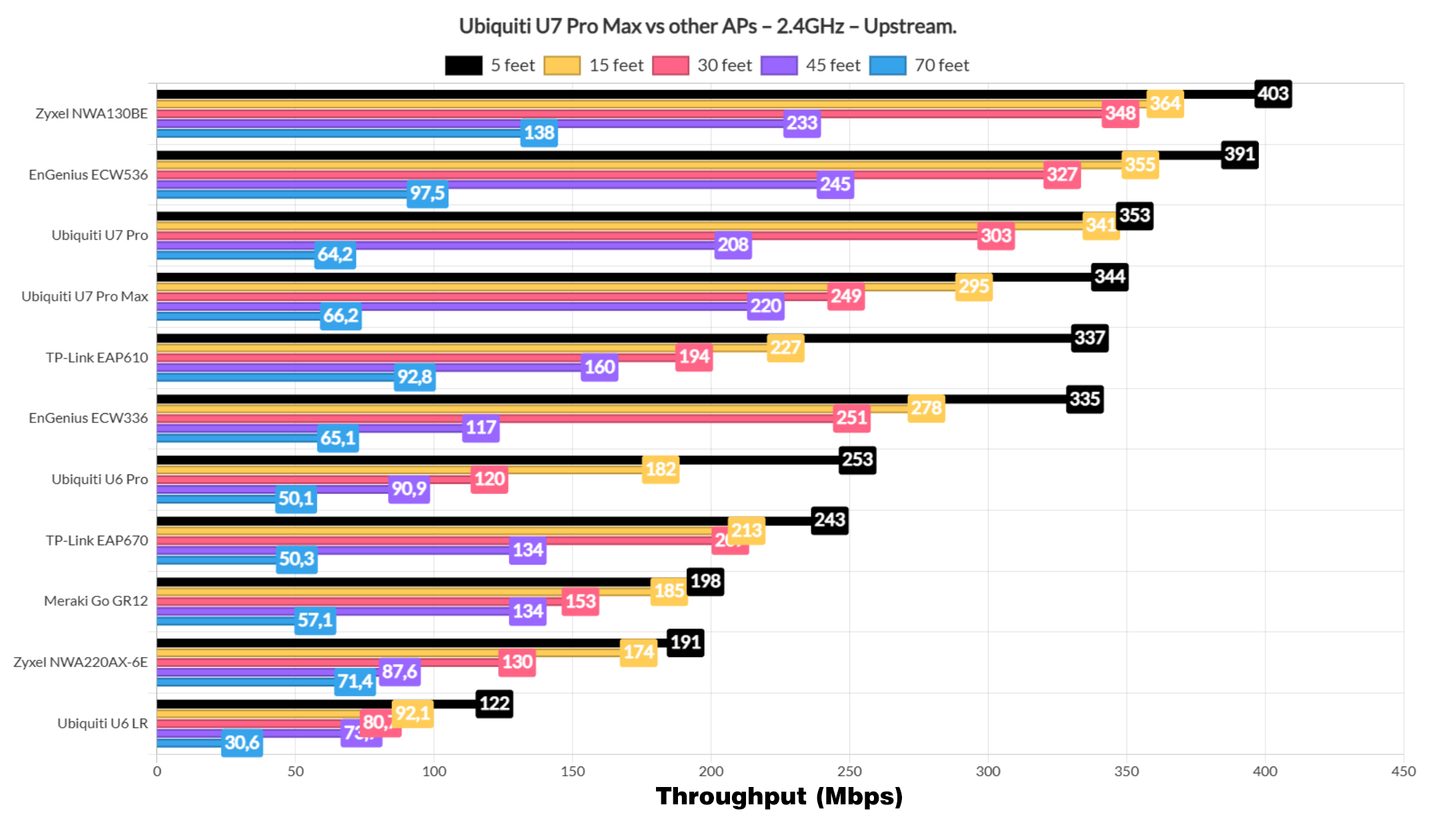
It seems that a bit less thought was put in the 2.4GHz radio performance because, while it’s not bad compared to other access points, the throughput was less impressive than on the U7 Pro.
Moving on to the multi-client tests and I know most of you are eager to see if Ubiquiti has made any improvements to the latency. The good news is that they did as you can see in the Test Lab tool.
With five clients streaming 1080p video, the WFi 6 and WiFi 7 devices performed reasonably well, staying near and below 75ms for 95% of the time. The two WiFi 5 clients struggled more as expected. Adding intense browsing alongside the streaming traffic did put a lot more pressure, the 1080p streaming results being worse than on the U7 Pro. With the 4K streaming, the Pro Max immediately pulled slightly ahead.
The download traffic showed a clearer improvement. With uncapped download running alongside two 4K streams and two browsing workloads, the downloading client had a noticeably better latency than on the U7 Pro. Adding a second downloading client increase latency substantially as expected, so I moved to the lighter test. This is where I downloaded a 1MB file repeatedly alongside browsing and VoIP, all handled much better with reasonable latency across the board.
The Thermal Management
The fan on the U7 Pro has divided the users in two main sides, one saying that the access point should have been cooled passively and that it’s possible with the right design, while the other side arguing that they finally get cooler Ubiquiti access points that don’t heat up as much to the point of discoloration. I don’t mind the fan because of the noise, but I am of the opinion that the fan should not have been there.
I say that because the fan can require future maintenance, such as dust cleaning or complete replacement and while Ubiquiti made the access a bit less painful than on the U7 Pro. And after following the road that the tech industry has taken the past few years, it is very much possible that trying to do any sort of maintenance yourself will lead to voiding the warranty which is not fun. That being said, does the U7 Pro Max get hot? Yes it does, significantly more than the U7 Pro.
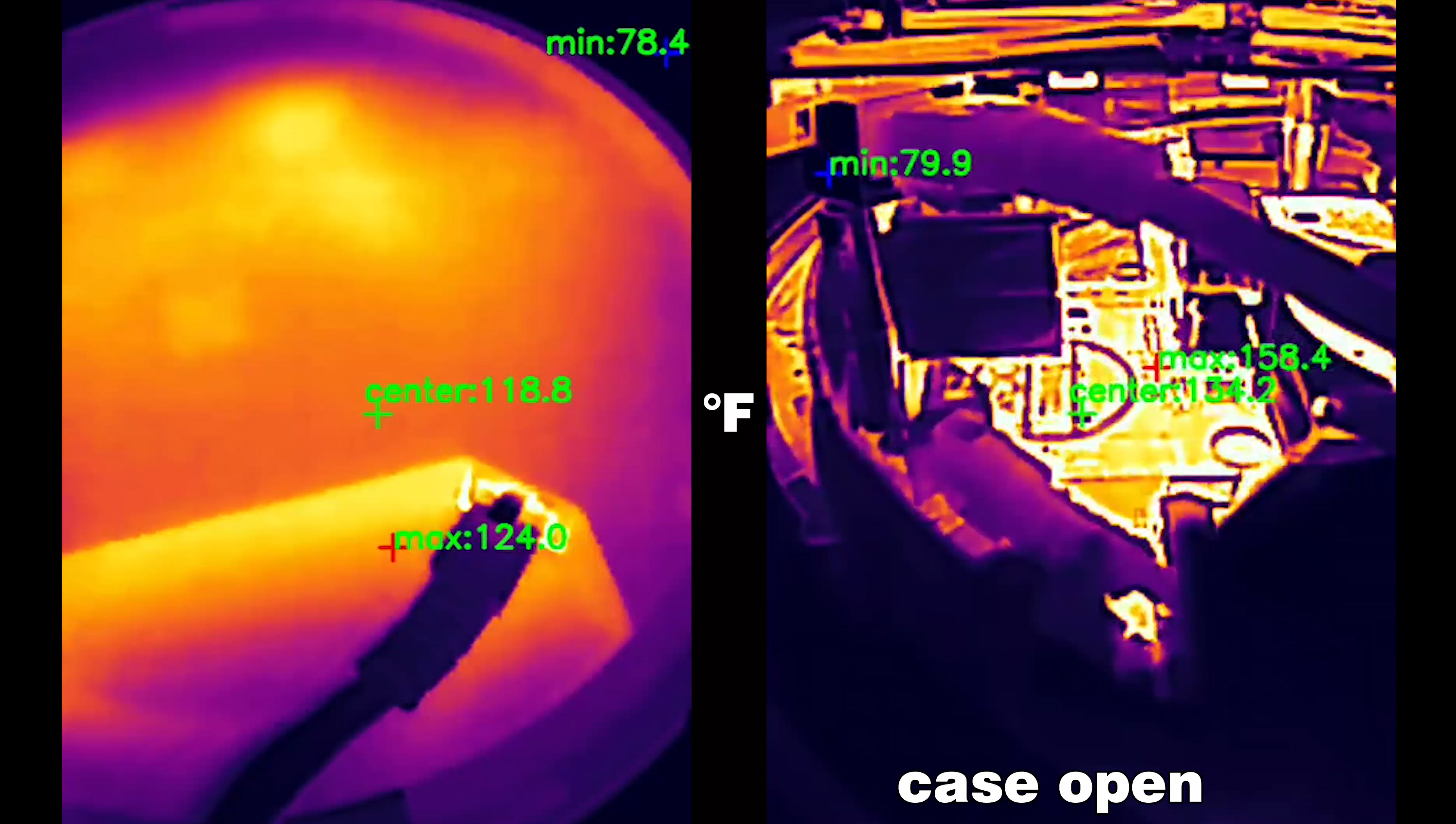
Up to the point of wondering whether the fan worked at all, so I opened the case while running some stress tests and even when the temperature reached more than 150 degrees, the fan still would not move.
I am not sure how Ubiquiti set it and what’s their uppermost limit, but when you add a fan, make sure it cools the case properly. And if they were worried about noise and the fan base complaints, well, go with a Noctua or alternative or build the device in a manner not to require a fan to begin with. But what do I know, I am not that type of engineer.
Ubiquiti U7 Pro Max Teardown
After having to carve my way into the U7 Pro, I armed myself with a hair blower and lots of patience. Turns out, Ubiquiti was a bit more conservative with its glue this time and it was far easier to open up the U7 Pro Max than I anticipated. This also bears the question on how resistant it is to the elements. Just like with the U7 Pro, there is no IP rating, so the device is built to be used indoors only.
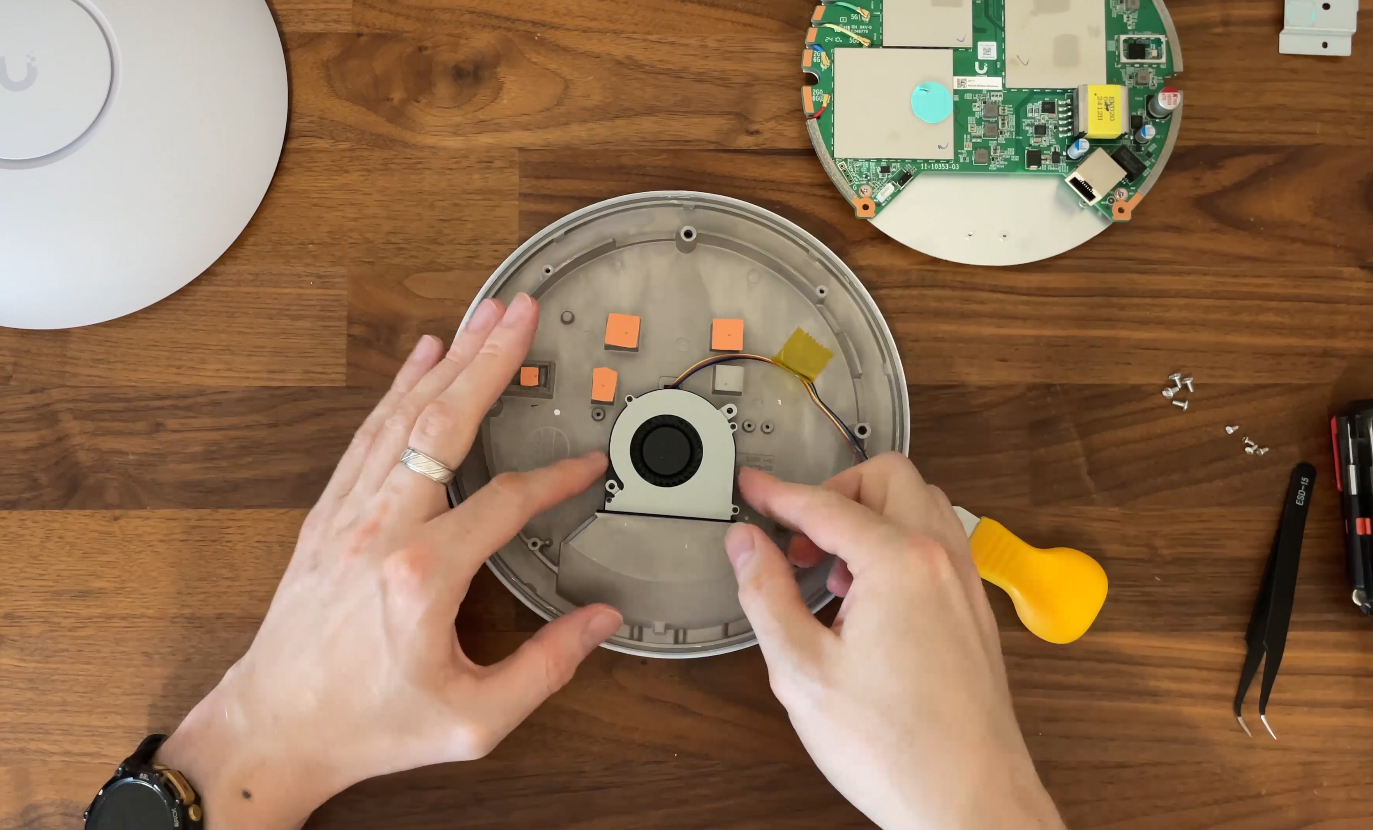
In any case, after opening the device, we can see the 12V fan that can be replaced if necessary and antenna pattern at the top of the PCB. If you want to see every step of the teardown, I already made a dedicated video for it. Otherwise, this is a quick overview of the main components. I also added a comparison table at the end.
Hardware Comparison
| Ubiquiti U7 Pro Max | Zyxel NWA130BE | Ubiquiti U7 Pro | EnGenius ECW536 | |
| CPU | quad-core 1.5GHz Qualcomm IPQ5322 | quad-core 1.5GHz Qualcomm IPQ5322 (Cortex-A53) | quad-core 1.5GHz Qualcomm IPQ5322 | quad-core 2.2GHz Qualcomm IPQ9570 (A73) |
| RAM | 1GB Samsung (SEC K4A8G16 SYC 8CTD) | 1GB Micron 3UR77 D8BPK (DDR4) | 1GB Samsung (SEC 340 K4A8G165WC) | 2GB (2x Nanya NT5AD512M16C4-HRI) |
| Storage | 4GB Kingston EMMC04G-MT32 | 512MB (MXIC X233662 MX35UF46E4AD-241)/ 16MB NOR flash (MXIC MX25U12832F) | 512MB KINGSTON (2401032 EMMC04G-M627) | 512MB NAND (MXIC MX35UF4GE4AD) |
| Switch | Qualcomm QCA8081 Ethernet PHY | Qualcomm QCA8385 Ethernet PHY | Qualcomm QCA8081 Ethernet PHY | 2x RealTek RTL8261N N2068H3 |
| 6GHz Radio | Qualcomm QCN6274 802.11be 2×2:2< | Qualcomm QCN6274 802.11be 2×2:2 | Qualcomm QCN6274 802.11be 2×2:2 | Qualcomm QCN6274 802.11be 4×4:4/td> |
| 5GHz Radio | Qualcomm QCN6274 802.11be 4×4:4 | Qualcomm QCN6274 802.11be 2×2:2 | Qualcomm QCN6274 802.11be 2×2:2 | Qualcomm QCN6224 802.11a/n/ac/ax 4×4 4×4:4 |
| 2.4GHz Radio | Qualcomm QCN6274 802.11b/g/n/ax 2×2:2 | Qualcomm IPQ5322 802.11b/g/n/ax 2×2:2 | Qualcomm IPQ5322 802.11b/g/n/ax 2×2:2 | Qualcomm QCN6214 802.11b/g/n/ax 4×4:4 |
The UniFi Platform
The UniFi controller can be used both locally and relying on the Cloud, but, of course, I am going to go with the former. If you used an older version and don’t see the Pro Max, make sure to update the software and it should work. In terms of layout and features, it seems identical to when I tested the U7 Pro, but as we will soon see, there is one major addition. Regardless of what you think about the current Ubiquiti hardware, the UniFi remains one of the best controllers out there.
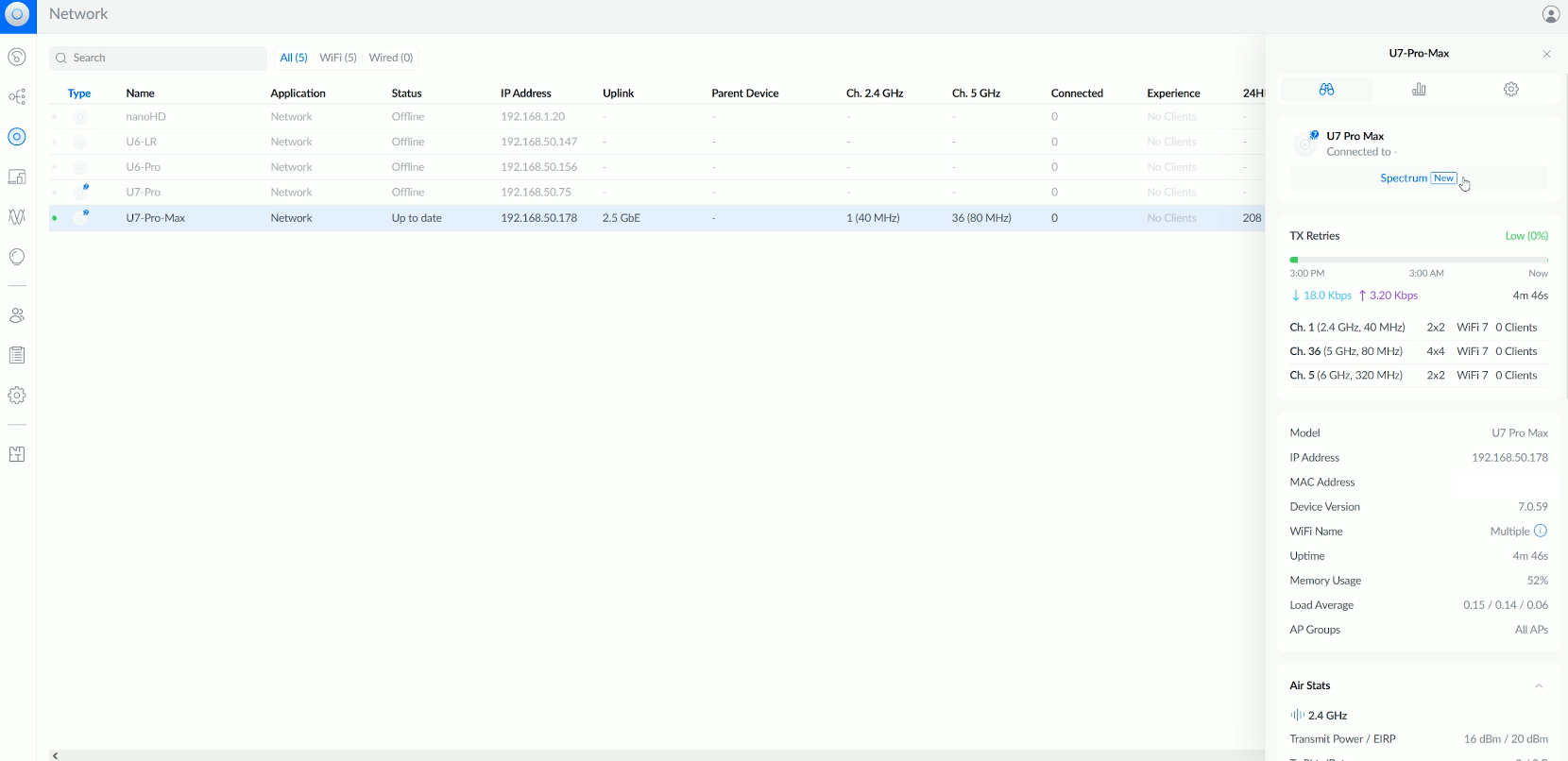
We can see the status info immediately and there is also the network Topology available in multiple display options. To access the dedicated settings, you do need to go to Devices, choose the U7 Pro Max and a side panel should pop up. Here, you can access the status-focused Overview, check the suggestion-focused Insight and make actual adjustments using the Settings. Bear in mind that these Settings apply only to this specific access point and if you want to make any global changes, you do need to go to Radios and the general Settings to choose WiFi.
This way, it’s possible to create new SSIDs and set how the Radios will behave. But I do need to return to the dedicated Settings and talk about the new feature called Spectrum. After opening up the U7 Pro Max, I did see a new WiFi chipset and antenna which are the backbone of this Spectrum features. And the way it works is that we are offered two ways of monitoring the neighboring WiFi network coverage and interference.
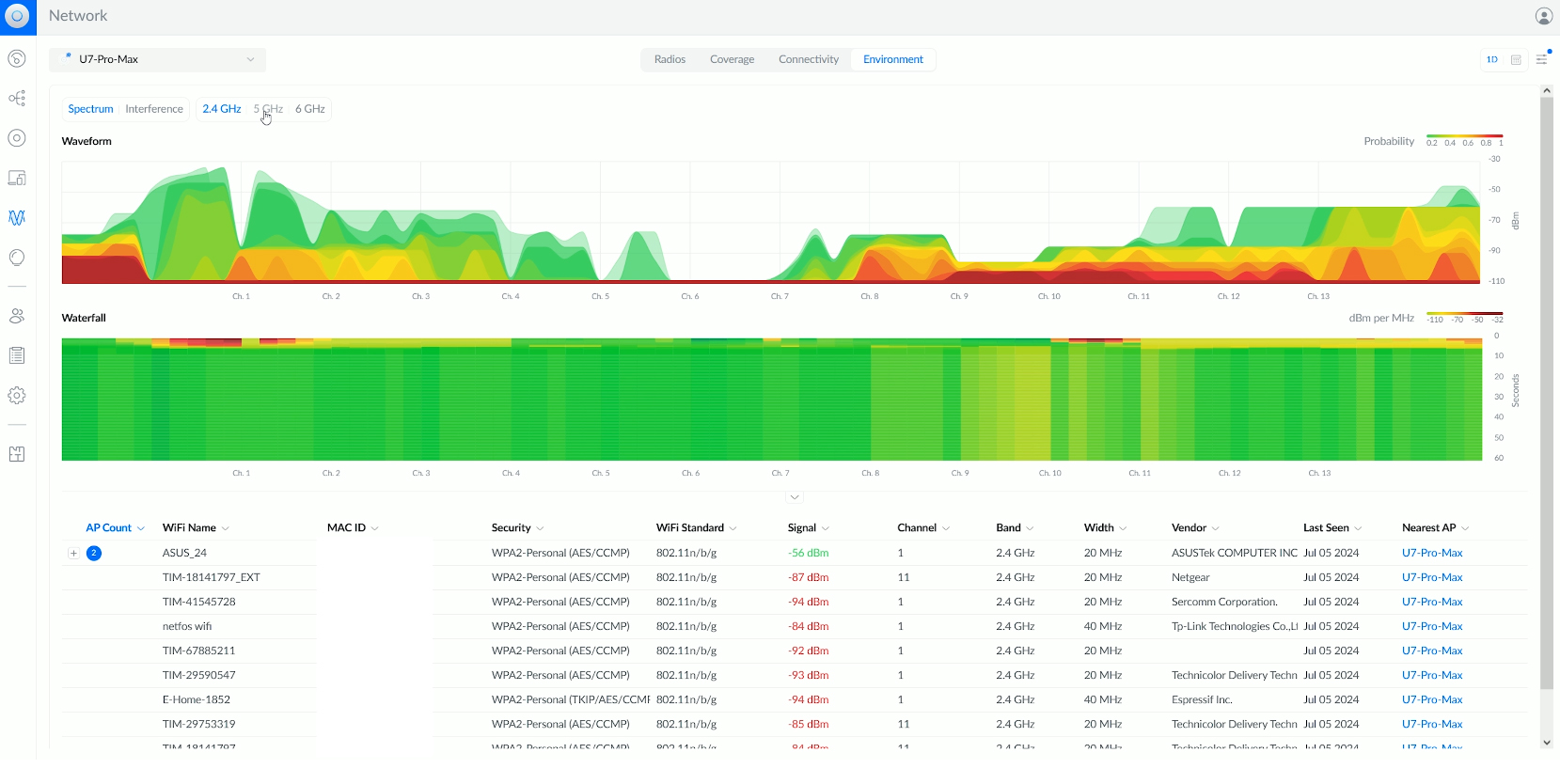
The main section shows the Spectrum and we can choose between the three radio bands. The Waveform is visually impressive, but what’s interesting is that we get a longer-term view under Waterfall which should be even more useful for access point deployment. Of course, green is good, yellow shows that you should be cautious and red is bad. The Interference section is quite straight forward in showing you which channels are utilized and which are not.
I have seen a similar approach to the Spectrum on the EnGenius ECW230S and it worked in a similar manner, but it’s functions went above just channel selection and into the security real. I anticipate that Ubiquiti will do the same, but I am not sure it will offer it for free. Then again EnGenius has locked this feature under a subscription pretty much in its entirety while Ubiquiti offers it at no additional cost for now.
The Conclusion
So, who is the Ubiquiti U7 Pro Max for? I assume it’s the same audience that eyed the U7 Pro, but wanted a bit more from a WiFi 7 access point. The Spectrum feature can be a game changer if it will be used alongside a robust set of security features and the 4×4 spatial streams are a welcomed improvement. The problem is that the MLO is still not here and the wide implementation at the client level is still far lagging behind. Should you get the U7 Pro Max? It really depends on whether you have at least a couple of WiFi 7 client devices, otherwise, I think it’s wise to wait up a bit more.
Ubiquiti U7 Pro Max
Pros
- Solid performance when stable
- MLO support
- 6GHz support
- PoE
Cons
- Not a fan of the fan
- A bit unstable at launch
- Can get very hot